


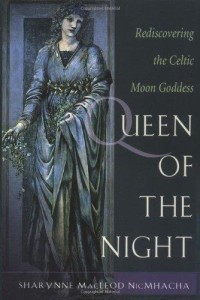
 I found this book as I was about to start researching the moon and its links to the goddess in original Celtic culture myself. This area of spirituality feels like home to me, being a quarter Irish and having chosen to live in Wales. I was aware that up till now I’d been working mostly on second hand information, much of which has been influenced by fairly recent neo-paganism (from the 1900s). So I was thrilled and a bit relieved to find that scholar and teacher Sharynne MacLeod NicMhach had already done the hard graft for me!
Using archeology, folklore, original texts, and occasionally her own sharp insight, Sharynne looks at the role and power of the moon in Celtic culture across Indo-Europe. I was shocked to discover just how little concrete evidence there really is for the existence of a moon goddess. Of course the Celts practiced an oral tradition and so their beliefs, customs and wisdom were never committed to paper.
Sometimes there is just one mention in a text of a deity name or a practice linked with the moon to help us make this connection. Luckily we do have a few references from contemporary authors but actually the majority of literature about the Celts is written much later by Christian clerics. I’m guessing all these sources may be ever so slightly biased according to the current events and beliefs of those times.
What is very clear, though, is that the lunar calendar was integral to Celtic life and important events were organised around it. Light and dark were held in equal esteem, and as the great light that shone in the darkness the moon would have been viewed as immensely powerful and important. Perhaps its cycle automatically gave it a feminine identity, linking as it did so obviously with the human cycles of menstruation, birth and death, and the natural cycles of water and plant life by which the Celts could maximise the chances of a fertile harvest.
A particular gem for me, especially since my business is called Triple Moon and my strapline contains the phrase “spiritual intelligence”, was reading of the Hindu connection between the moon and the mind. One of those rare “aha!” moments that as a reader you really treasure.
What I loved about this book is that it is not at all fluffy or lightweight. This is serious, thorough, factual research that enables the reader to trace and place the moon and its associations in historical context, as far as the current limitations of archeology and evidence allows. I was so impressed that I carried on past the end of the book and immediately read through all the small print notes at the back! In the end, I was appropriately happy to be left still a bit in the dark, to know that there are mysteries and questions that we can’t answer about exactly how this beautiful heavenly body was worshipped. The moon continues to work her mystical magic.
The Celts included the divine in their everyday lives and valued a personal, felt experience of something greater than themselves. Sharynne encourages us to explore and understand what the moon means for us and how it can speak to us as individuals now, with meditations and lots of interesting exercises around the themes of each chapter. This, she seems to be suggesting, is actually what matters most and where you will truly find this elusive goddess. I feel sure our Celtic ancestors approve.
Click on the picture of the book to buy from Amazon.

Semele Xerri
Latest posts by Semele Xerri (see all)
- Spiritual guidance October/November 2026: Find what lies beneath - October 7, 2026
- Spiritual guidance September/October 2026: Freedom is a soul-led life - September 8, 2026
- Spiritual guidance August/September 2026: Inner wisdom finds its voice - August 10, 2026

Follow me


Twitter (X) Feed

What connects love and war? Old wounds leave us in survival mode, fiercely defending our needs. What if we became curious about “the other” instead? Listening and seeking to understand is recognising our shared humanity. Peace takes practice, patience, and self-compassion.
🌿Feeling disconnected from yourself? Perhaps it's an invitation to pause, listen and find your way back.
Coming Home to Yourself is my six-week online journey of self-discovery, inner wisdom, and authentic living. Early Bird offer ends 14th October.
A Libra New Moon on 10 October begins a new lunar cycle through to 8 November. An invitation to look beneath the surface at the unconscious patterns driving us personally and collectively. Understand what moves you, and you can direct your passion wisely.
An autumnal misty morning, hedgerows glittering with hammock spiderwebs. I wanted to melt into one and simply reflect and dream. Autumn draws me inward: towards deeper thoughts, nourishing words, and quieter voices. Know yourself better. Something precious awaits if you listen.
When I talk about loving life, I don't mean just the good bits. I mean all of it. Joy and sorrow. Comfort and pain. Success and disappointment. Gain and loss. When you're anchored in the home of your heart and soul, you can meet life as it comes. You come home to yourself. 🌿